Jordan Mercier is 28. His wife is 27. Together they run a small junk removal business out of Denham Springs, Louisiana, and he is the first to say they are still figuring it out.
The company is called Second Life Cleanouts. It clears out houses, garages, rentals and storage units around Greater Baton Rouge, and it sorts every load by hand so usable furniture and appliances go to local thrift stores instead of the landfill.
That part of the business is already running. The part Mercier talks about most is still a plan.
A business built on stewardship
In his own words, Second Life Cleanouts is a “locally, Christian family owned and operated donation first junk removal business.” His faith shows up in plain view. The company’s About page quotes Luke 16:11: “If then you have not been faithful in the unrighteous wealth, who will entrust to you the true riches?”
On the site, the verse sits right beside an explanation of how the donation sort works. The idea is simple: a dresser that is still solid or a fridge that still runs is not trash just because sorting it takes effort.
The name follows from that idea. A piece’s first life ends in one house. Its second life starts in another, after a local thrift store prices it for a new family.
How the work runs today
The process is simple by design. A customer texts a few photos of what needs to go, and Mercier replies with a free price range based on the load’s volume. The final price is set in person, before anything goes on the trailer.
On the day of the job, he texts when he arrives and when he leaves, clears everything in one visit, and sends before-and-after photos when the work is done. Pieces that need a repair go only to thrift stores he has vetted to fix them before resale. He does not do repairs himself.
For now, Mercier does most jobs himself and brings in help when a load is too heavy for one person to move safely. Each donation is shared on the company’s Facebook page with photos and the name of the store that received it.
The plan he talks about most
In a public comment, Mercier described his goal as “a business that operates as a ministry that helps people who have made the wrong decisions in their past, and are trying to make the right ones now stay on that path.”
Asked what that would look like, he was specific. “My dream/goal is to work with sober living houses, recovery groups, and probation offices, and/or prisons/courts (if that’s possible for community service) to provide work, both paid and volunteer,” he said.
He sees volunteer or community service hours as a possible first step. “The volunteer/community service could even lead to actual employment depending on performance,” he added.
Why work matters so much after a mistake
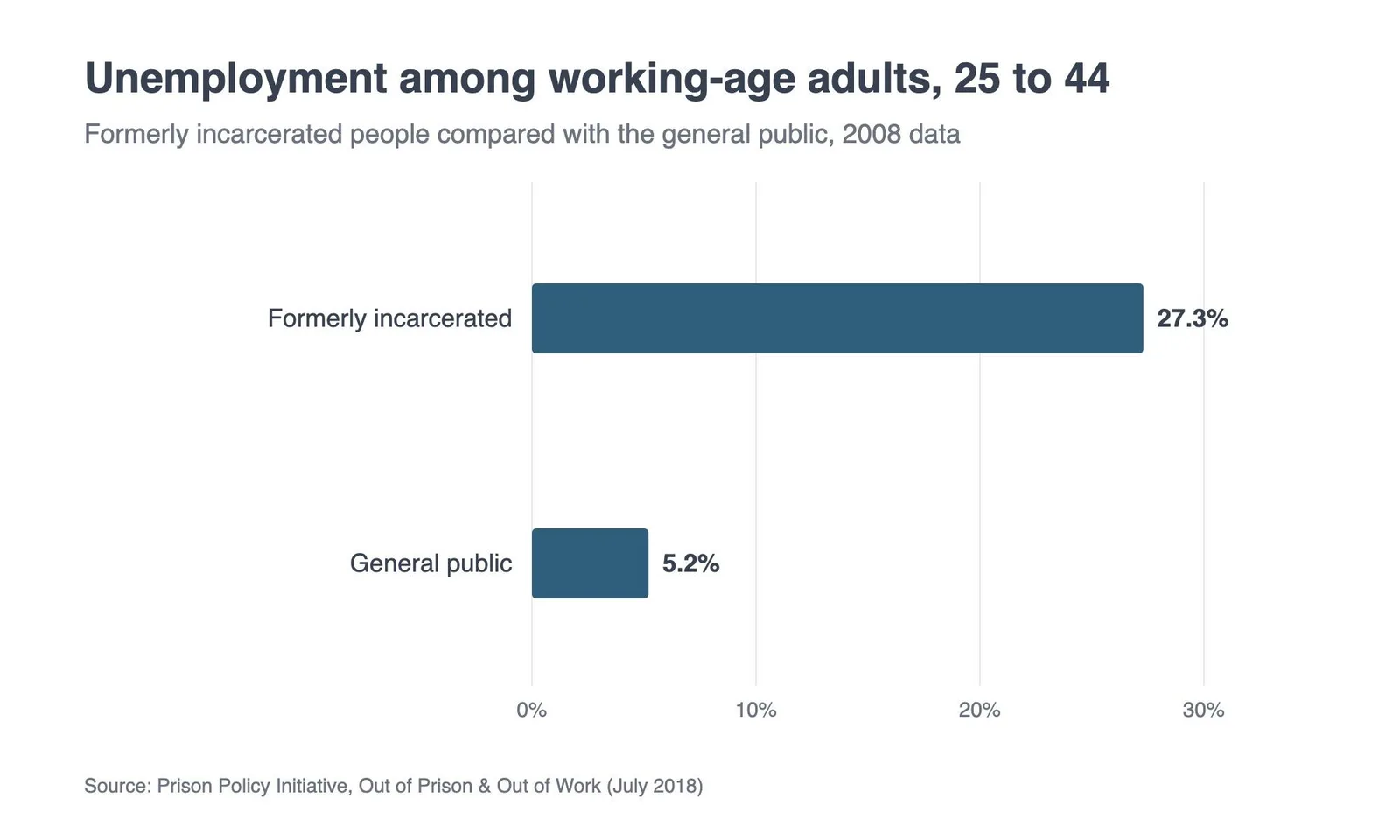
The need Mercier points to is well documented. A 2018 analysis by the Prison Policy Initiative, Out of Prison & Out of Work, estimated that formerly incarcerated people were unemployed at a rate of more than 27 percent.
Among working-age adults 25 to 44, the report put the rate at 27.3 percent for people who had been to prison, compared with 5.2 percent for their peers in the general public. The data year was 2008, the most recent the authors had.
Source: Prison Policy Initiative, Out of Prison & Out of Work, July 2018.
The authors also found unemployment was highest in the first two years after release. That window is exactly when a steady job, and a boss willing to give one, can do the most good.
Junk removal is a natural fit for that kind of first job. The work is physical, the skills are learned on the job, and every load has a clear start and finish.
Hauling with a purpose
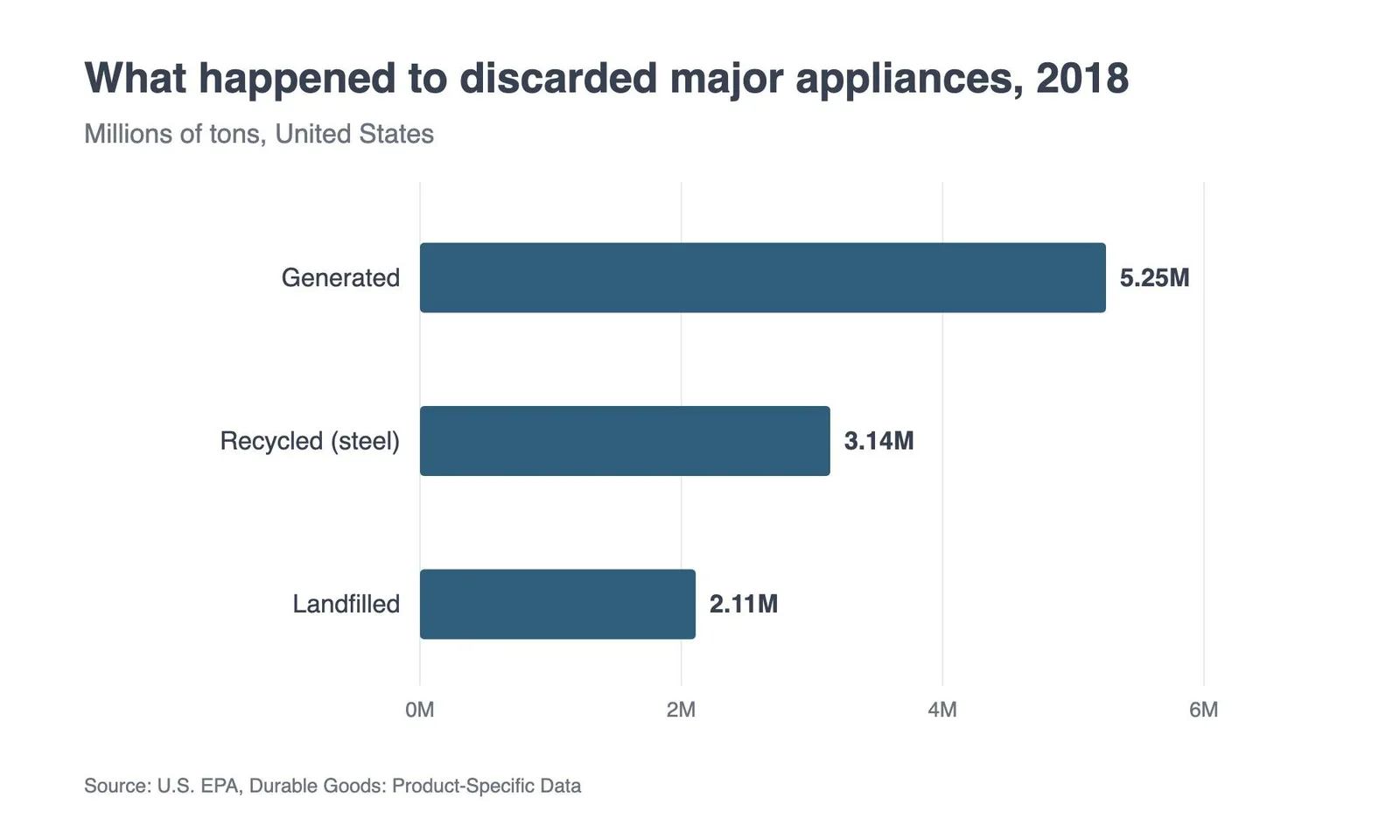
The other half of the mission is about what ends up on the trailer. Old appliances are one of the easier wins. Refrigerators, washers, and water heaters are mostly steel, and the U.S. Environmental Protection Agency’s Durable Goods: Product-Specific Data shows that metal gives them a path out of the landfill.

Of the 5.25 million tons of major appliances discarded in the United States in 2018, EPA estimates that 3.14 million tons were recycled through steel recovery. About 2.11 million tons were landfilled.
Source: U.S. EPA, Durable Goods: Product-Specific Data.
Furniture has no such path. EPA found that about 80 percent of discarded furniture went to landfills that year. That is the gap Mercier’s hand-sort is meant to close: working appliances and sturdy furniture go to thrift stores first, and only what cannot be used goes to the dump or the scrap yard.
New, and honest about it
Second Life Cleanouts is a young company, and its website says so: “We’re just getting started, and we’re working to earn every customer’s trust one job at a time.”
Mercier is open about wanting guidance. In the same comment, he said he is figuring it out as he goes and would welcome mentors who share his faith.
He also says the company will point customers elsewhere when that serves them better, such as a dumpster rental for a big project or a free charity pickup for a few good pieces that can wait.
What comes next
The near-term work is the ordinary work of any small business: answering texts, building a customer base and lining up thrift stores willing to be named. The longer plan gives the company its purpose.
If it comes together, a cleanout in Denham Springs could do three good things at once. It could clear a house for a family, put a usable couch in front of a new one, and give someone who is rebuilding a life a reason to show up for work in the morning.
