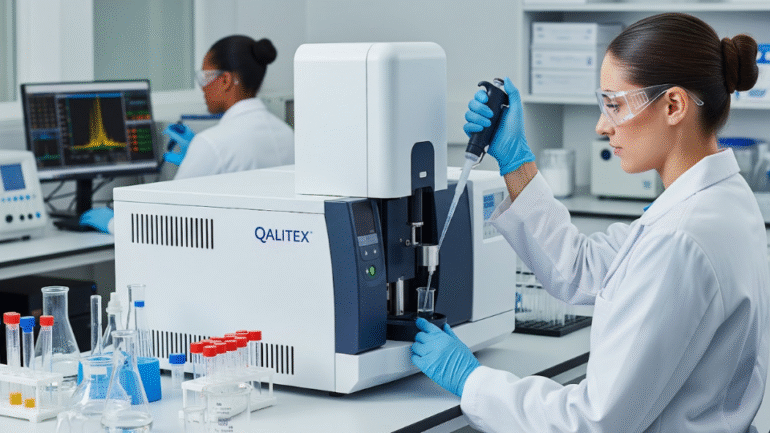
Heavy metal contamination often goes unnoticed until it becomes a serious problem. From cosmetics to food to dietary products, trace elements of lead, arsenic, cadmium, and mercury can quietly enter consumer goods and pose long-term risks. For brands, this is not only a compliance issue but also a direct matter of public health.
This article looks at why heavy metal testing matters, the scientific methods behind it, and the challenges companies face before shifting to how Qalitex Labs ensures accurate, reliable results for compliance.
Why Heavy Metal Testing Matters for Compliance and Safety
Heavy metal testing directly impacts consumer safety and regulatory compliance. Understanding why this type of testing is critical helps explain why laboratories like Qalitex play such a key role in protecting both brands and consumers.
How heavy metals enter consumer products
Contamination doesn’t always stem from negligence. Heavy metals can be naturally present in soil and water, which means raw materials often carry trace elements before they are even processed. Manufacturing environments can also contribute, especially if equipment is outdated or improperly maintained.
Health consequences of exposure
The risks associated with heavy metals differ depending on the element:
- Lead: Linked to developmental delays and neurological damage.
- Arsenic: Associated with cancer risk and cardiovascular problems.
- Cadmium: Causes kidney and bone damage.
- Mercury: Impacts the nervous system and brain function.
These effects are cumulative. Children, pregnant women, and individuals with long-term exposure face the greatest danger, making strict testing protocols essential.
The regulatory landscape
Governments across the world have defined strict maximum allowable limits:
- FDA (United States) enforces thresholds in cosmetics and dietary products.
- Health Canada requires compliance for foods and natural health products.
- California Proposition 65 demands warnings for products containing metals above safe harbor levels.
- European Union directives enforce even tighter controls in certain categories.
For businesses, non-compliance can mean product recalls, fines, or reputational damage. Testing ensures products remain both legally compliant and trusted by consumers.
Methods and Standards in Heavy Metal Testing
Reliable heavy metal testing depends on robust, validated scientific methods. The precision of the equipment and the standards applied make all the difference in whether results are actionable.
ICP-MS and AAS testing methods
Two methods dominate laboratory testing:
- Inductively Coupled Plasma Mass Spectrometry (ICP-MS): Known for its extreme sensitivity, ICP-MS detects metals down to parts per billion. It is the gold standard for multi-element analysis.
- Atomic Absorption Spectroscopy (AAS): Useful for detecting specific metals at lower concentrations, especially in targeted testing.
Both require highly trained professionals to operate and interpret results, ensuring that the numbers reflect real-world safety standards.
Setting compliance thresholds
Testing results mean little without reference values. Laboratories compare data against legally defined thresholds, which vary depending on region and product type. For example, California’s Prop 65 sets exposure levels that are stricter than many international standards. Interpreting these differences accurately is crucial for brands that sell across multiple markets.
Validation and repeatability
No testing method is reliable without validation. This process ensures the method consistently produces accurate results. Repeatability, or running the same test multiple times under the same conditions, further confirms reliability. In compliance testing, this is what separates credible laboratories from those offering incomplete assessments.
Industry Challenges and Why Precision Matters
Even with regulations and advanced methods, companies face challenges that make heavy metal testing more than a routine process. Precision is vital because even a small oversight can carry significant consequences.
Variability in raw material sourcing
The same ingredient sourced from two different regions can yield very different contamination levels. Soil composition, irrigation water, and local mining activity all influence the presence of heavy metals. Without consistent testing, brands cannot guarantee uniform safety.
Supply chain complexities
A single product often contains ingredients from multiple suppliers. If just one of those suppliers fails to control contamination, the entire product line is at risk. This makes vendor audits and frequent testing indispensable.
Market pressure and brand reputation
Consumers are increasingly informed and vocal about product safety. A single recall or publicized case of contamination can permanently erode trust. For companies, accuracy is a direct safeguard for brand credibility.
It is here that Nour Abochama, Vice President of Operations at Qalitex, emphasizes the human side of testing:
“We see heavy metal testing as a responsibility. Brands come to us because they want to be sure their products safeguard the people who use them,” said Abochama.
Inside Qalitex: Approach to Heavy Metal Testing
At Qalitex, heavy metal testing is a comprehensive service designed to give brands confidence and protect end consumers. The laboratory combines advanced technology with tailored solutions, ensuring that every product meets or exceeds global standards.
Advanced instrumentation and protocols
Qalitex invests heavily in modern equipment such as Inductively Coupled Plasma Mass Spectrometry (ICP-MS), enabling precise detection of even trace elements. Each instrument undergoes strict calibration and maintenance to ensure accuracy. Beyond the hardware, the lab follows international guidelines and internal protocols that eliminate guesswork and maintain consistency.

Tailored testing solutions
Not all products require the same testing approach. A cosmetic formulation demands different sensitivity levels compared to a dietary supplement or raw botanical extract. Qalitex works closely with each client to build a testing plan that reflects the unique risks of their materials. This flexibility allows brands to get results that are both compliant and relevant to their markets.
Integration with compliance strategy
Testing is one piece of a larger compliance puzzle. Qalitex supports brands in interpreting results, understanding regulatory thresholds, and adapting sourcing strategies when necessary. Instead of sending raw numbers, the lab provides insights that help companies make practical decisions.
Case Examples and Global Relevance
The importance of heavy metal testing becomes clear when looking at past incidents and broader market realities. These examples highlight why accuracy and vigilance matter.
Regulatory enforcement cases
History shows that even major brands can fall short. Cosmetics have been recalled due to lead contamination in lipsticks, rice-based foods have been flagged for high arsenic levels, and supplements have faced market withdrawal after cadmium was detected. In each case, the lack of proactive testing had financial and reputational costs that far outweighed the price of preventive analysis.
Market globalization factor
Modern supply chains stretch across continents. A single batch of raw material may pass through multiple countries before reaching production lines. With such complexity, risks multiply. A supplier in one region may comply with local standards that are less strict than those in export markets. Without testing at the destination level, contamination can slip through unnoticed.
Consumer advocacy
Consumers today expect transparency. Advocacy groups routinely test products independently and publish results. When discrepancies are found, the impact spreads quickly across media channels. For brands, this makes it essential to conduct thorough testing before products ever reach the shelves.
Future of Heavy Metal Testing and Product Compliance
As technology evolves and regulations tighten, heavy metal testing will only become more important. Laboratories and brands must prepare for a future where precision and accountability are even more closely scrutinized.
Technology advancements
Emerging technologies are making testing faster and more sensitive. Portable spectrometers, for example, are under development, which could allow for in-field testing at supplier sites. Advances in data analysis also promise to deliver more detailed breakdowns of contamination patterns.
Stricter regulations ahead
Authorities worldwide are moving toward lower tolerance thresholds for heavy metals. The European Union, in particular, has been updating standards in food and cosmetics to reflect new health data. Companies that take a proactive approach now will avoid scrambling to adjust later.
Sustainability and clean sourcing
The demand for clean-label and environmentally responsible products is reshaping supply chains. Brands are expected not only to test their products but also to demonstrate that they source responsibly. Heavy metal testing will play a key role in verifying that sustainability claims are credible.
Closing Thoughts
Heavy metal contamination is a risk no brand can afford to ignore. Regulations are strict, consumers are watchful, and the consequences of negligence are costly. Laboratories like Qalitex provide the expertise and reliability needed to navigate this landscape, combining advanced technology with a client-centered approach.
For businesses, working with Qalitex means protecting their reputation and earning the trust of consumers who expect nothing less than safety first.